Pink
The queen of flowers in perfumery
For centuries, it has accompanied life's beautiful moments. Its scent evokes a garden in the early morning, petals still beaded with dew, the softness of an embrace, or the light of a spring morning. There is something deeply familiar about the rose. Even before recognizing it, it awakens an emotion.
If the rose has become the queen of flowers in perfumery, it is not just for its beauty. It is because it offers an unparalleled olfactory richness. At times fresh, velvety, honeyed, fruity, or delicately spicy, it reveals an infinite range of nuances that evolve according to its variety, terroir, and the moment of its harvest. One flower, a thousand expressions.
For more than three thousand years, it has inspired civilizations and perfumers. Its fragrance transcends eras without ever losing its elegance, making the rose one of the most precious ingredients in perfumery.
A flower grown with patience
At Aimée de Mars, the rose is part of the House's history.
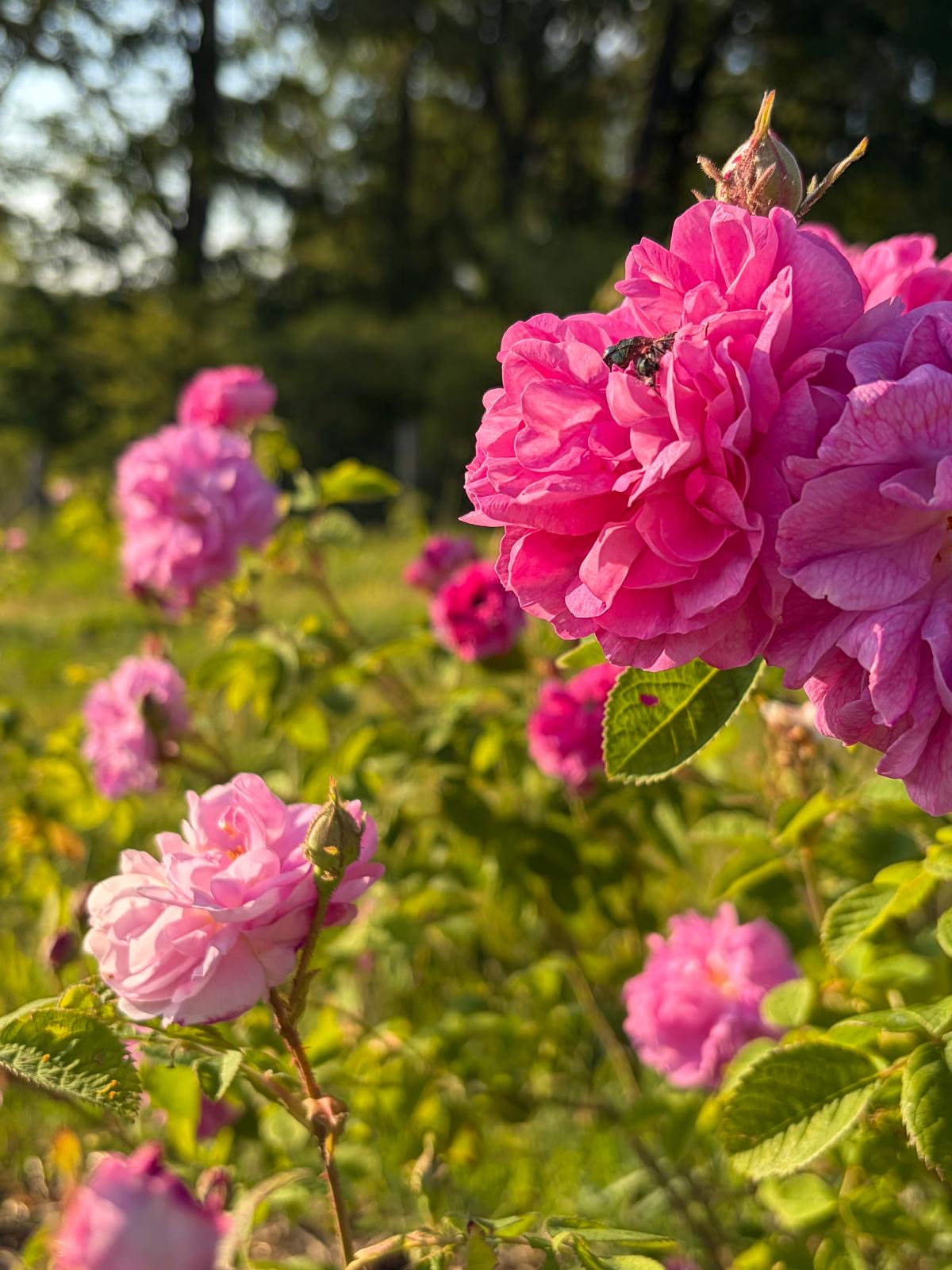
For our creations, we select a Damask Rose absolute (Rosa x Damascena), grown in Bulgaria, in the famous Rose Valley. Every spring, the flowers are handpicked at the first hours of the day, when the night’s freshness has preserved the full delicacy of their scent. They are then quickly processed to retain the full richness of their olfactory facets.
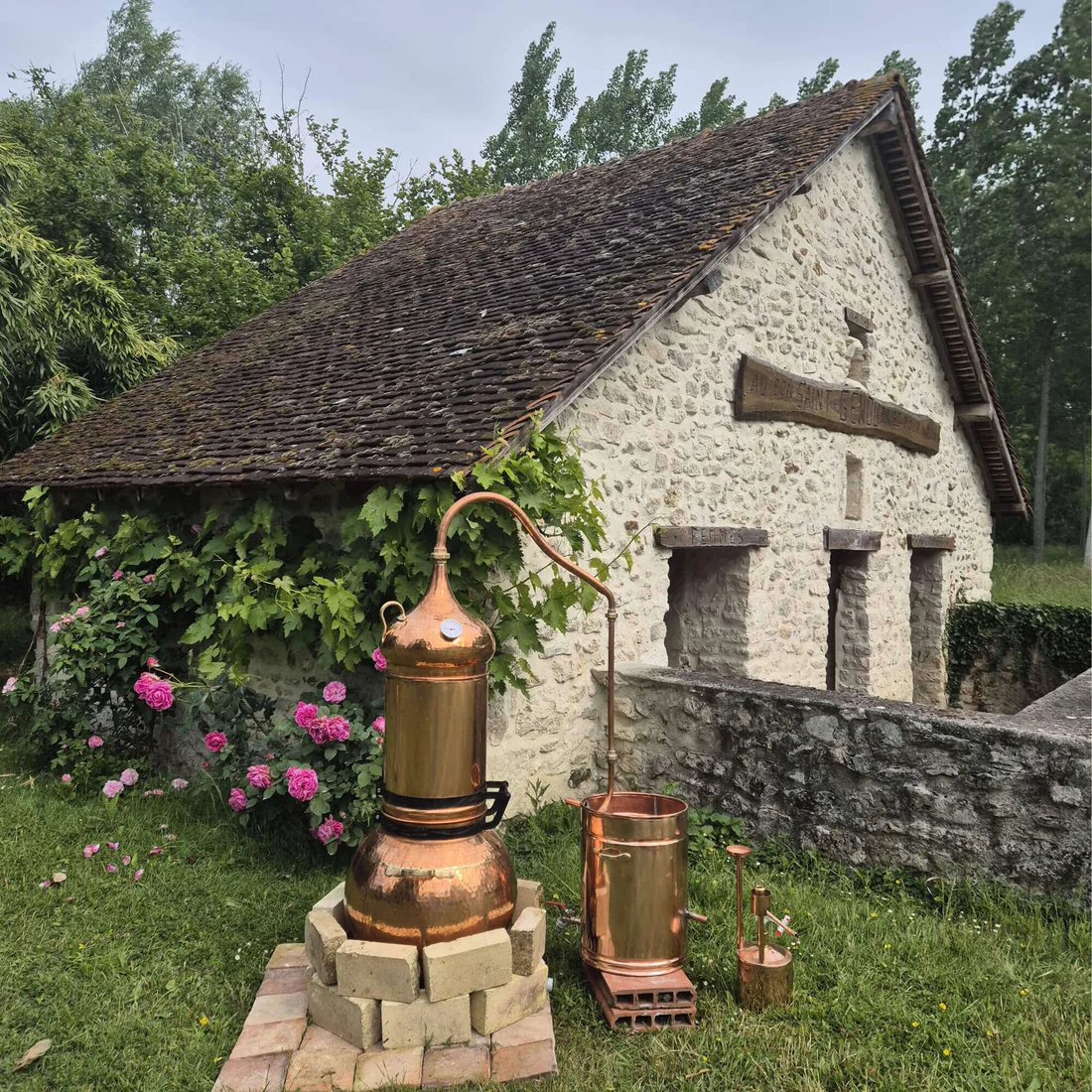
At the Aimée’s Garden, Valérie also cultivates several varieties of roses, including the Provins Rose (Rosa gallica), the Damask Rose, and the Sweet Love. Harvested according to the seasons, they are distilled in a copper still with our precious spring water from St Genulphe to create our rose floral water, a faithful reflection of the garden.
Watching a plant grow, waiting for the right moment to harvest it, accompanying its transformation... This closeness to life naturally nourishes the creation of Aimée de Mars perfumes. Each ingredient is chosen as much for the beauty of its scent as for the story it tells, from the garden to the trail it leaves behind.
A flower that reveals the other materials
In perfumery, the rose has a rare talent: the ability to create harmony. It brightens citrus, softens woods, enhances spices, and adds depth to floral accords. Present without ever dominating, it connects the ingredients with natural elegance and contributes to the balance of the composition. On the skin, its scent evolves delicately. The initial notes are fresh and enveloping. Its trail follows the movement rather than imposing itself, revealing the full subtlety of this exceptional flower. It is this ability to bring both light and depth that makes the rose one of the iconic signatures of Aimée de Mars creations.
Did you know?
-

A HARVEST AT DAYBREAK
The roses are picked in the early hours of the morning, when their aromatic molecules are most concentrated. This morning harvest helps preserve the full delicacy of their fragrance.
-

ONE OF THE MOST PRECIOUS MATERIALS IN PERFUMERY
It takes several tons of petals to produce a single kilogram of rose absolute. This requirement makes rose one of the most noble materials in high perfumery.
-

AN INFINITE OLFACTORY PALETTE
Floral, fruity, honeyed, lemony, spicy, or slightly woody... The rose reveals an incredible diversity of facets, which explains its essential place in the perfumer's palette.


To be found in our creations
The rose reveals its many facets in several Aimée de Mars creations, including Belle Rose, Lily Ambre, Mythique Iris, Belle Aphrodite, Divine Emeraude, Divine Isis, Pétillante Aurore, Natasha and Mystique Améthyste. Sometimes fresh and luminous, sometimes velvety and sensual, it interacts with woods, spices, and white flowers to reveal a different emotion in each fragrance.
The imprint of this material
- Origin at Aimée de Mars: Bulgaria (Damask Rose), Aimée's Garden France (Provins Rose, Damask Rose, and Sweet Love)
- Olfactory family: Floral
- Olfactory signature: Heart (the heart notes give the deep identity of the perfume. Mostly composed of floral notes, they express themselves between 15 minutes and 4 hours).
- Present in: Belle Rose, Lily Ambre, Mythique Iris, Belle Aphrodite, Divine Emeraude, Divine Isis, Pétillante Aurore, Natasha and Mystique Améthyste