


Myrrh
The resin that reveals depth
Its scent is warm, resinous, and delicately balsamic. It blends woody, amber, and slightly spicy facets that bring a sense of depth and elegance. Without ever overpowering a composition, myrrh adds texture and extends its trail with remarkable softness.
For millennia, myrrh has accompanied the history of perfumery. Once transported along caravan routes, it was among the most precious materials of the ancient world. In Christian tradition, it is one of the gifts offered by the Magi, alongside gold and frankincense. This presence testifies to the unique place this resin already held—precious, sacred, and deeply symbolic. Even today, it captivates perfumers with its olfactory richness and its ability to give personality to the most refined accords.

A resin shaped by nature
At Aimée de Mars, we use myrrh derived from Commiphora myrrha, a tree that naturally grows in the arid landscapes of Somalia.
To harvest this resin, the bark is carefully incised. An amber sap slowly flows out before solidifying upon contact with the air. These small drops, called myrrh tears, are then hand-collected once they have reached full maturity.
Each harvest requires patience and precision. The tree follows its own rhythm, offering a resin whose richness depends as much on the climate as on the expertise of the harvesters.
This attention to the origin of materials naturally aligns with Aimée de Mars’s philosophy. Each ingredient is selected for its quality, its story, and the connection it maintains with life, in order to create sincere perfumes deeply inspired by nature.
A material that provides warmth
In perfumery, myrrh is a particularly precious base material.
It warms woody accords, enriches resins, complements spices, and adds a velvety texture to amber compositions. Its scent evolves slowly on the skin, revealing increasingly soft and enveloping nuances over time.
Its assertive character never overshadows other ingredients. On the contrary, it offers them depth and remarkable longevity, creating a harmonious trail that carries the fragrance to its final notes.
In Aimée de Mars creations, myrrh contributes to the sensation of warmth, balance, and elegance that defines the most enveloping accords.
Did you know?
-
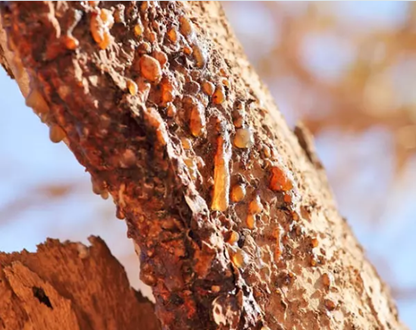
RESIN TEARS
Myrrh is obtained from the resin of Commiphora myrrha. After the bark is cut, the sap naturally hardens before being harvested in the form of small tears.
-

TWO OLFACTORY EXPRESSIONS
Depending on its extraction method, myrrh can reveal more aromatic facets through its essential oil, or richer and balsamic qualities in the form of a resinoid.
-

AN ESSENTIAL INGREDIENT IN PERFUMERY
Appreciated for several thousand years, myrrh remains today one of the great resins of high perfumery. Its depth and lasting power make it a valuable ally for woody, amber, and oriental accords.


To be found in our creations
Myrrh reveals all its richness in Mystique Améthyste, Natasha, and Divine Isis. Combined with woods, flowers, and resins, it brings a balsamic, warm, and delicately amber depth to these creations.
The footprint of this material
- Origin at Aimée de Mars: Somalia
- Olfactory family: Balsamic
- Olfactory signature: Balsamic, amber, woody, slightly spicy
- Olfactory note: Base (Base notes give the trail of the perfume. They last up to 24 hours and are most often composed of vanilla and woody notes.)
- Found in: Mystique Amethyst, Natasha and Divine Isis.
